
NEWS
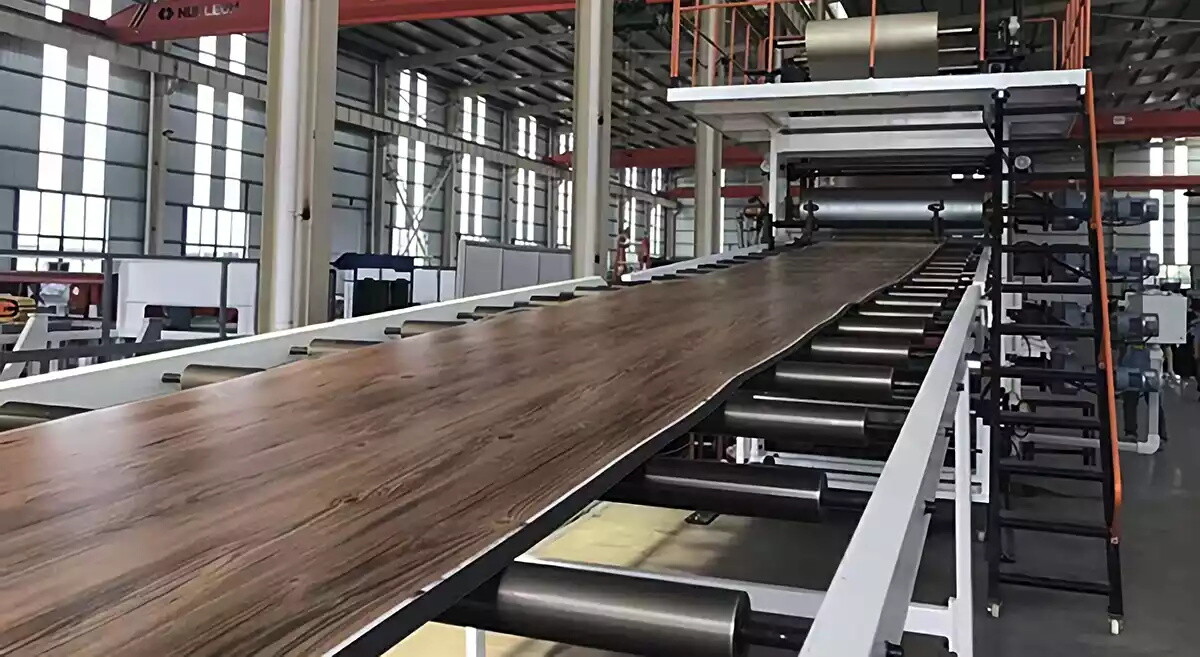
SPC floor production process
1. Mixing Materials
PVC resin powder, plasticizer, stabilizer, and carbon black are added to the blender according to the formulated ratio. The machine automatically adds the plasticizer and limestone powder. Stir for approximately 30 minutes. The uniformly mixed mixture is then conveyed onto a conveyor belt and then into an internal mixer for heating and mixing.
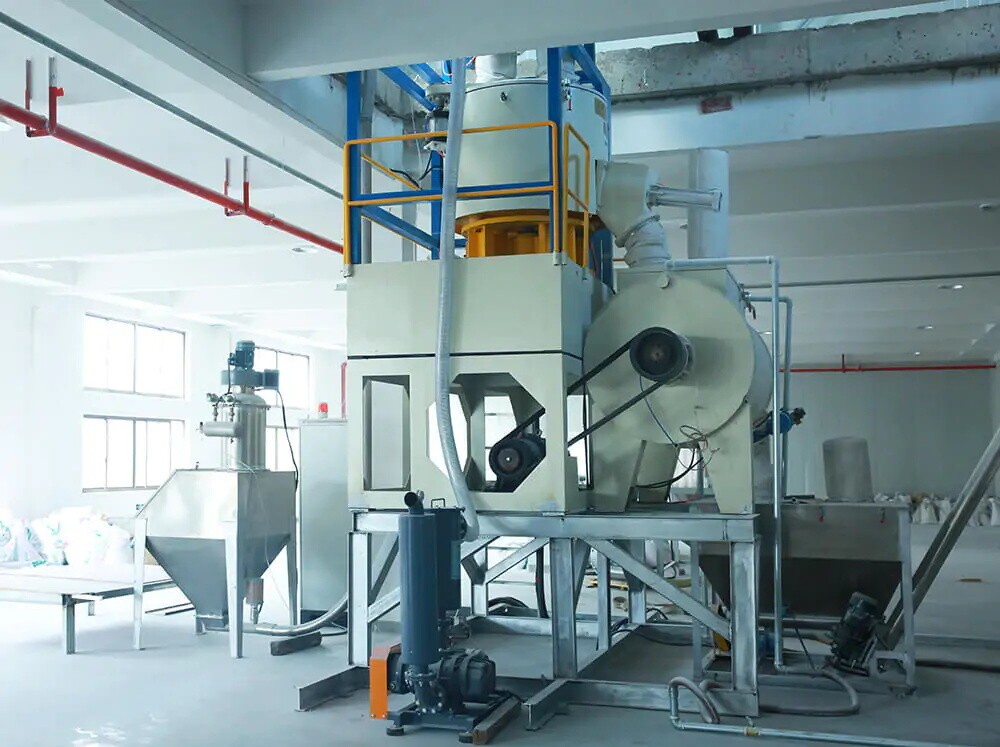
2. Block Extrusion
The raw material powder enters the drum, where it is gradually compacted and shaped. The temperature is approximately 170°C. Finally, it is cooled and refined to form the mid-base and bottom-base layers. The raw material is then cut into blocks measuring 1 x 1m or 1 x 1.3m.
3. Embossing
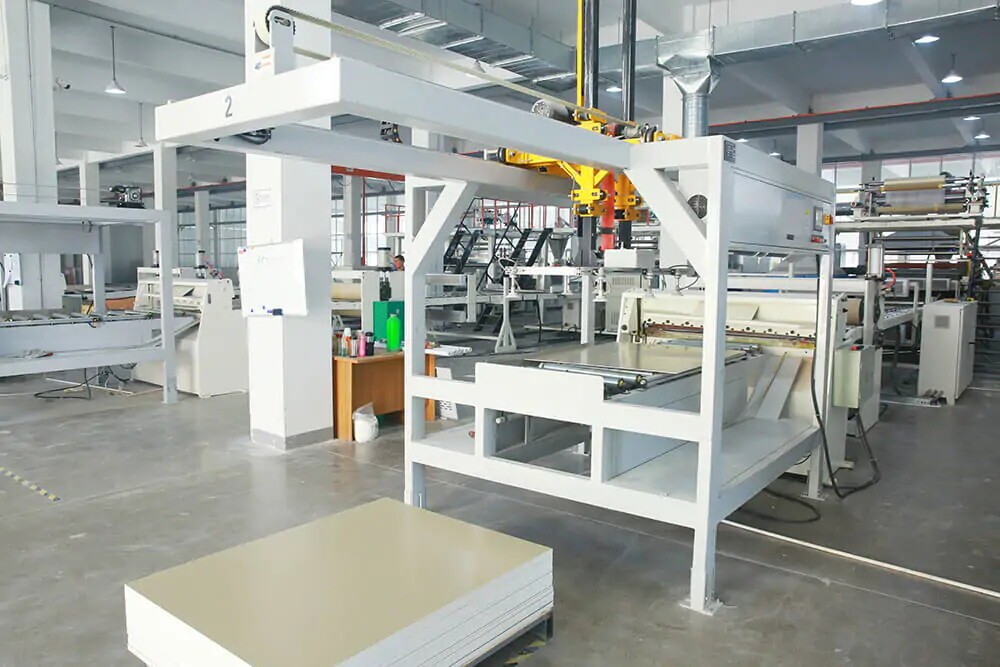
Lay canvas, embossed board, soft film (matt film, high-temperature paper), base/middle material, wear-resistant layer, color film, and soft film (matt film, high-temperature paper) on the steel plate in this order.
4. Hot Pressing
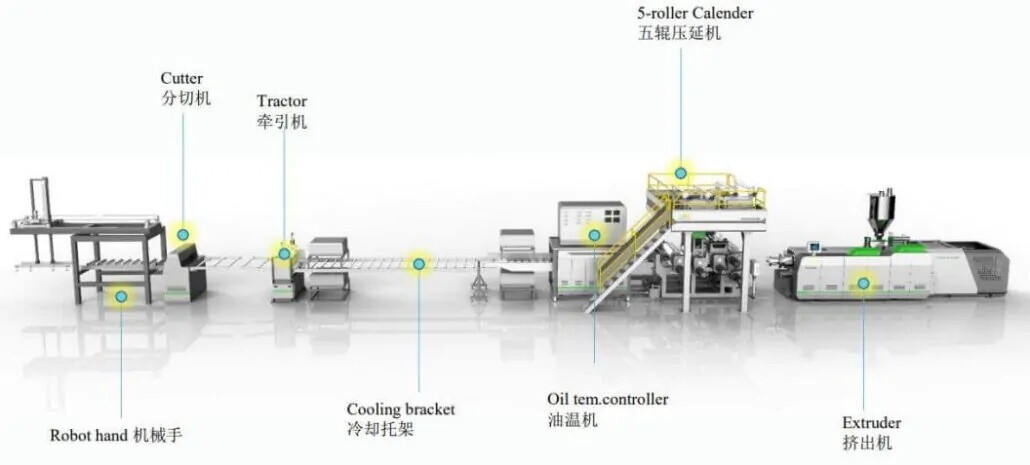
After pressing with another steel plate, the floor is placed in a hot press, where heat and pressure are continuously applied. After approximately 40 minutes, the floor is removed, the soft film is removed, and the floor is pressed into shape. After hot pressing, the layers of the product are firmly bonded.
5. UV Coating
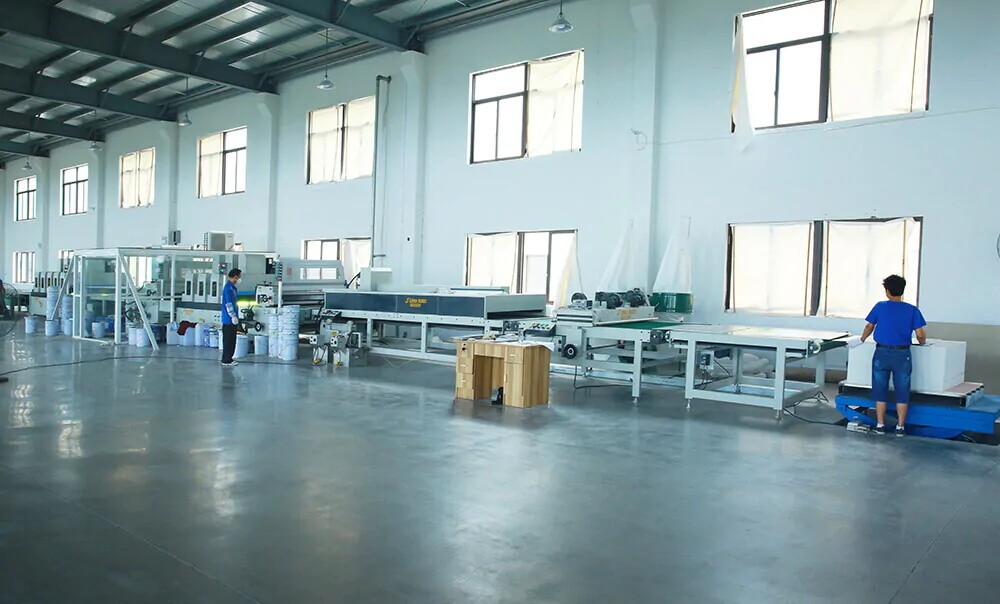
The pressed flooring is placed on a conveyor belt and evenly coated with UV lacquer using a roller. It is then exposed to UV light and placed in an oven for baking.
During this process, the flooring undergoes two coats of UV lacquer and two more UV lacquer treatments. The purpose of UV lacquer application is to increase the gloss to meet the customer's requirements. (The floor's glossiness is not directly related to the amount of UV lacquer applied; it is primarily determined by the brilliance of the UV lacquer.)
6. Annealing
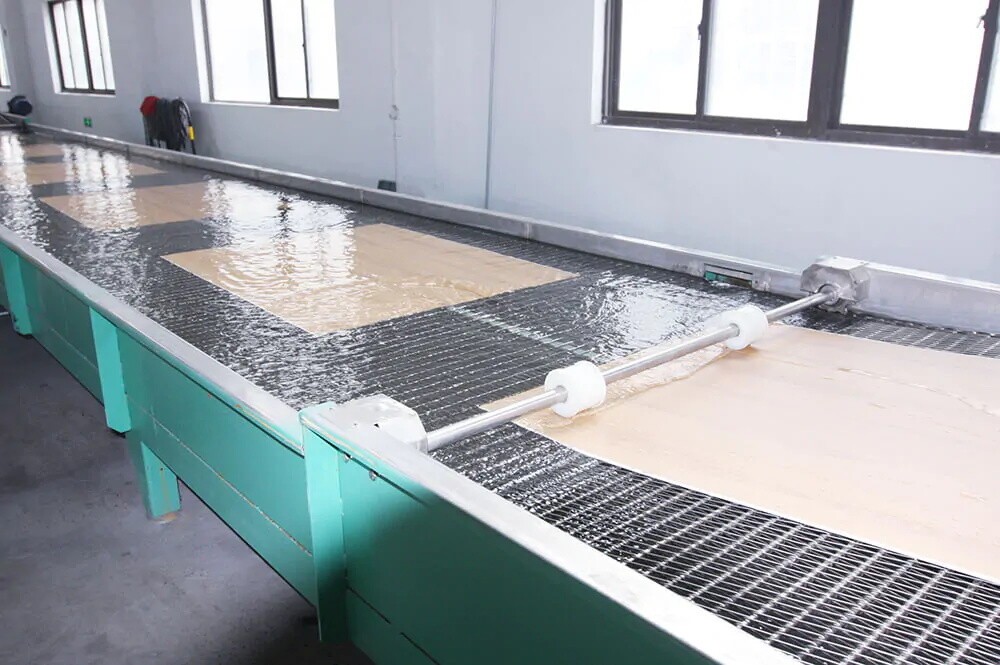
After the paint has completely cured, cool the floor in cold water. Finally, use a cooling machine to dry out any surface moisture. Finally, return to room temperature.
The purpose of annealing is to reduce shrinkage and warping of the PVC floor through heating and cooling on the production line.
7. Shaped the Floor
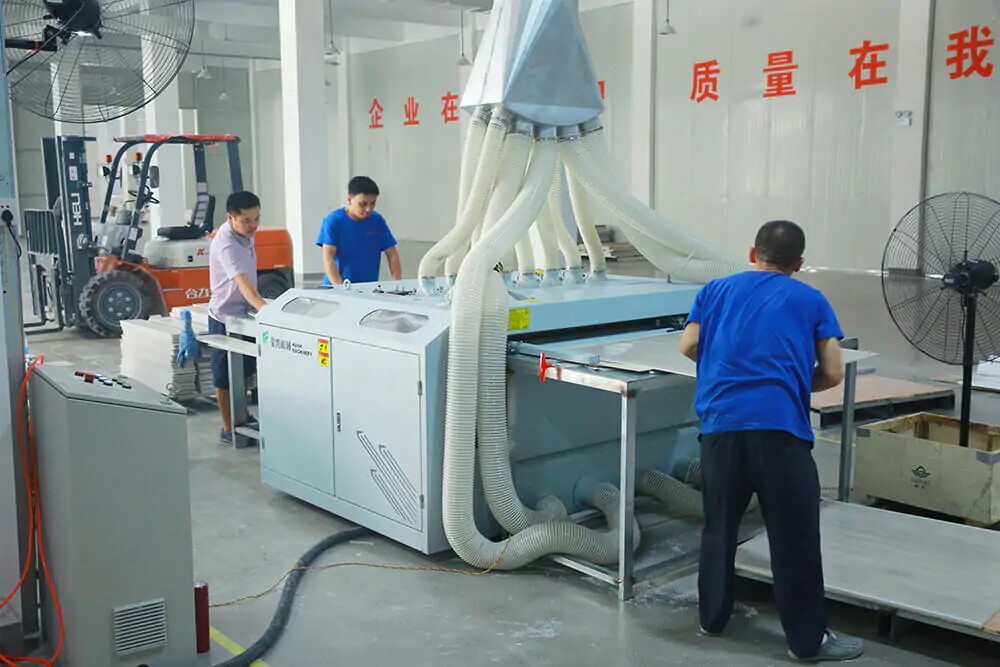
The floor is heated by a machine, making it easier to drill holes and form different shapes.
8. Profiling
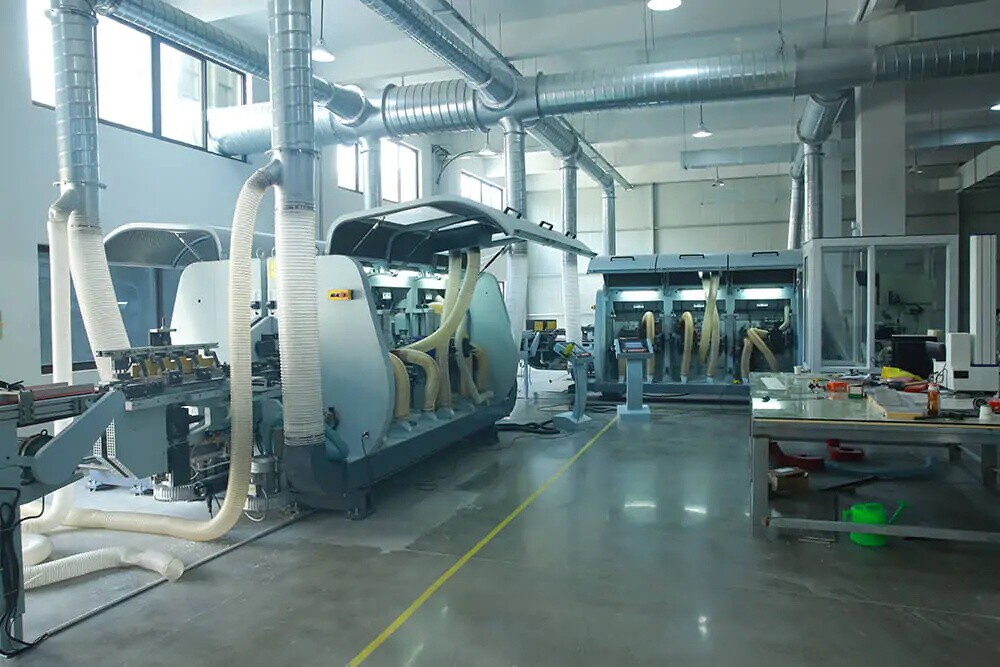
Profiling is performed according to customer specifications. Adjustments are made using a tool to the flooring dimensions. Once adjusted, the flooring pieces are placed on a conveyor belt, where they are profiled first on the long sides and then on the short sides.The profiling machine ensures high precision in the production of snap-on products.
9. Painted V Groove
After painting the V groove, the texture of the product imitating the wood texture is more realistic.
10. Applying Silent Mats
If the SPC flooring has an underlayment layer, it is added at this stage. The underlayment layer is placed on the bottom of the SPC core layer and laminated together with heat and pressure.
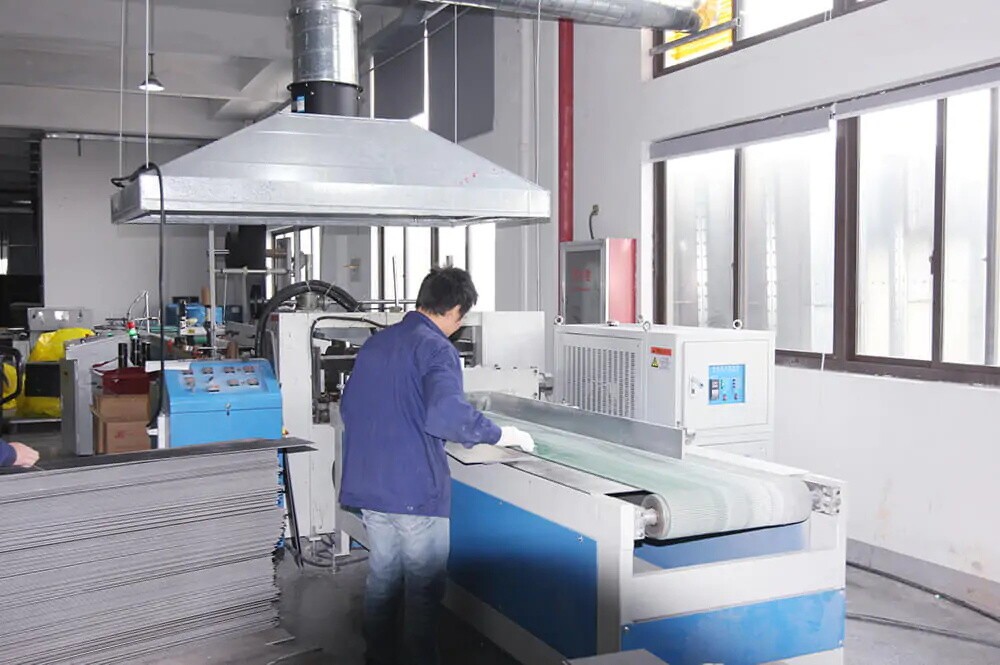
11. Quality Control
After the flooring is manufactured, it goes through a quality control process to ensure that each plank meets the required standards. This includes checking the thickness, dimensions, and color consistency of the flooring.
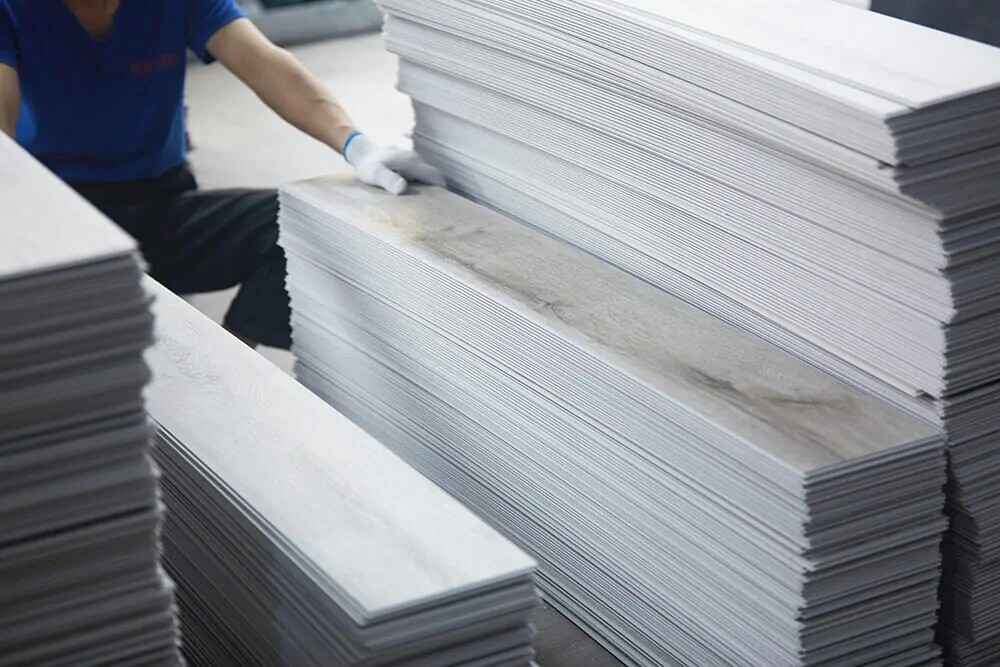
12. Package
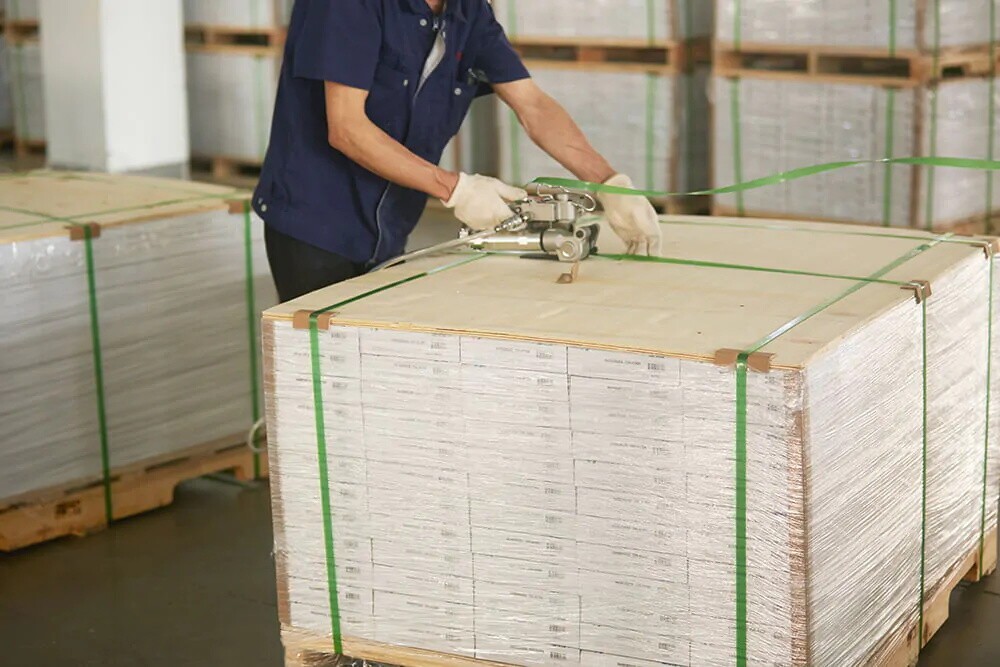
The floor inspects and does the final cleaning before entering the box. In particular, it is necessary to remove obvious scratches, impurities, dirt, bubbles, color difference, discoloration, white edges, delamination, folding, bevel, residual angle, etc. failed products. Finally seals the box, checks the label, and marks the content accurately.
Related Posts
Online Message
GET IN TOUCH